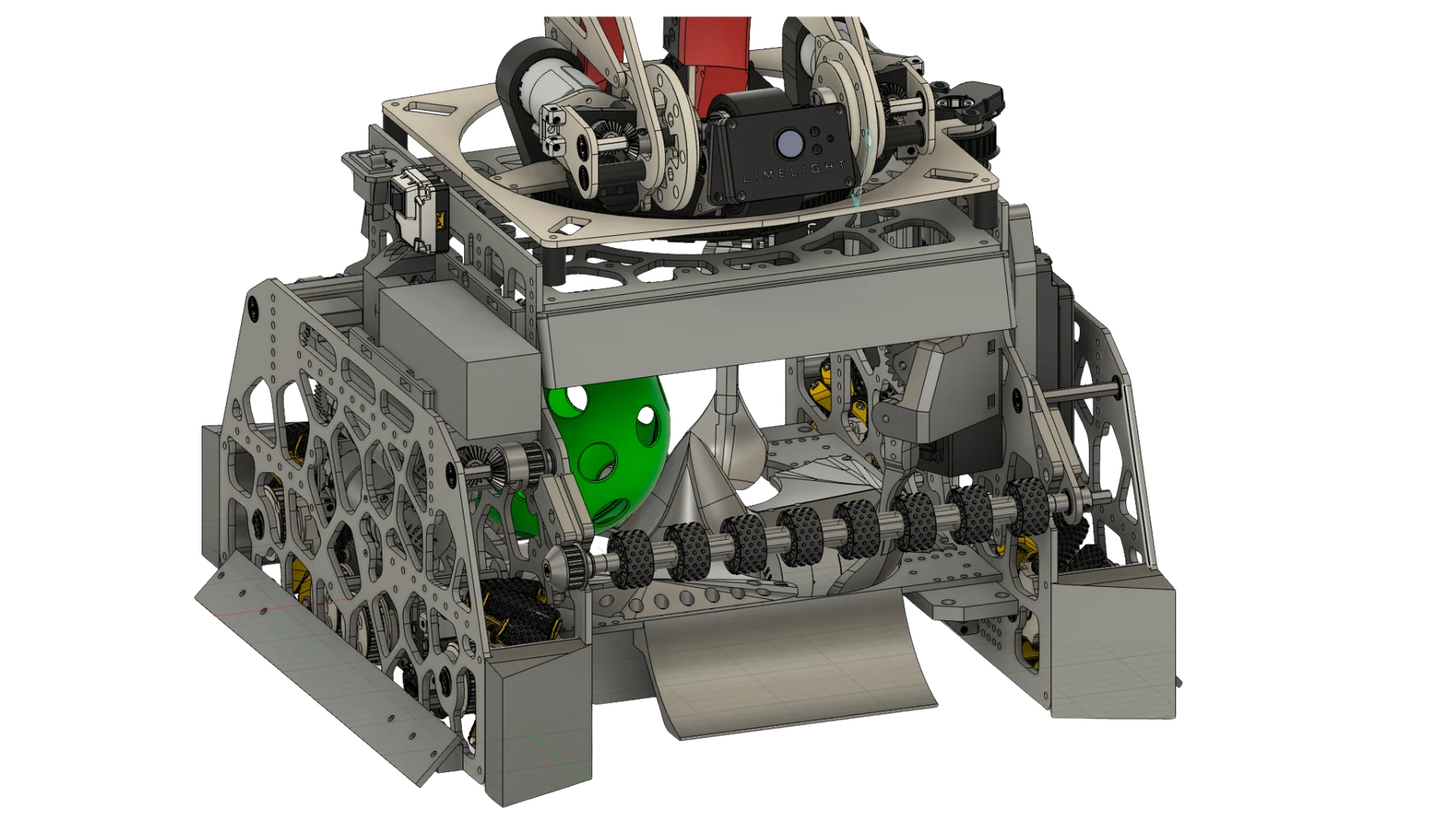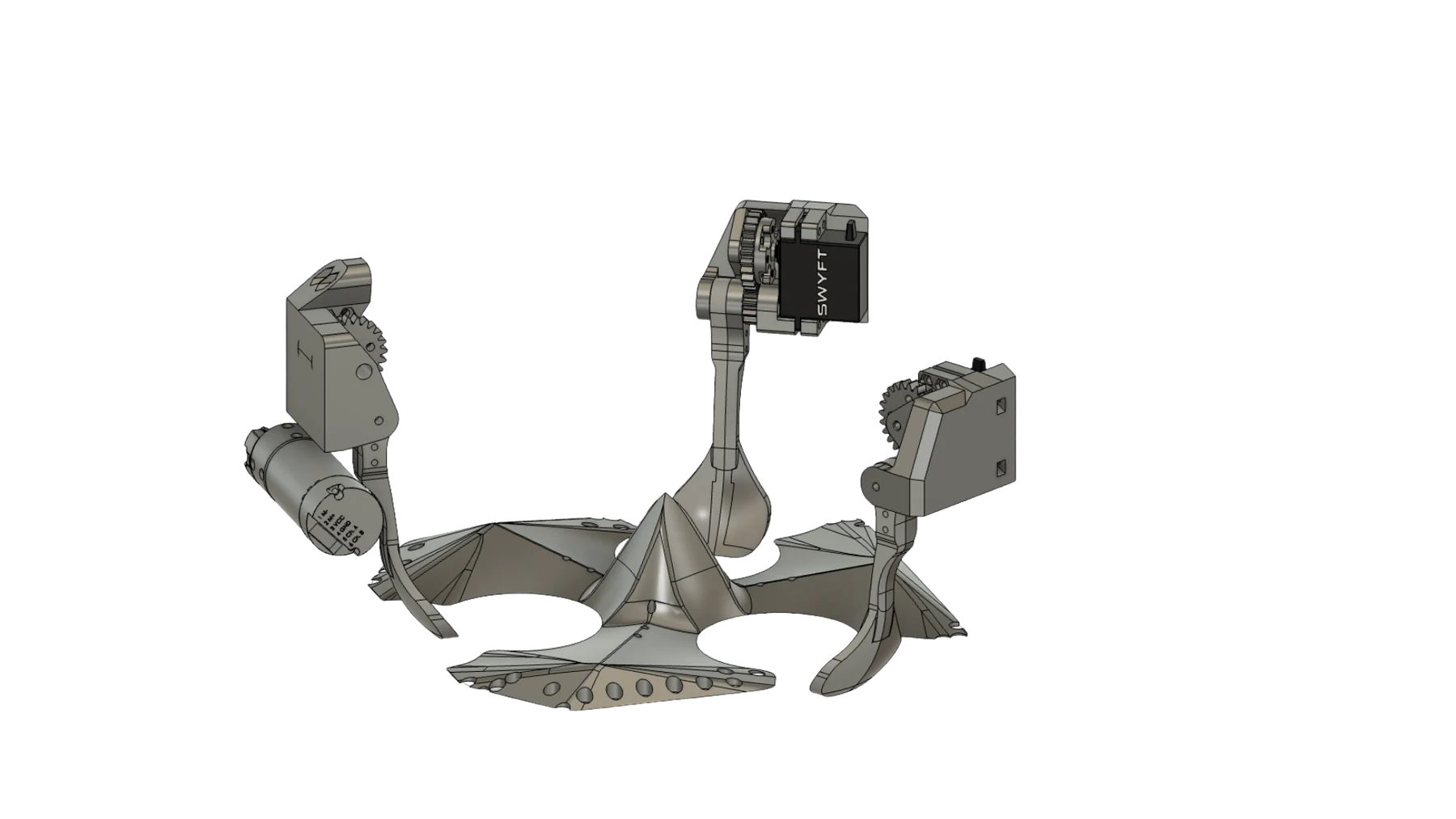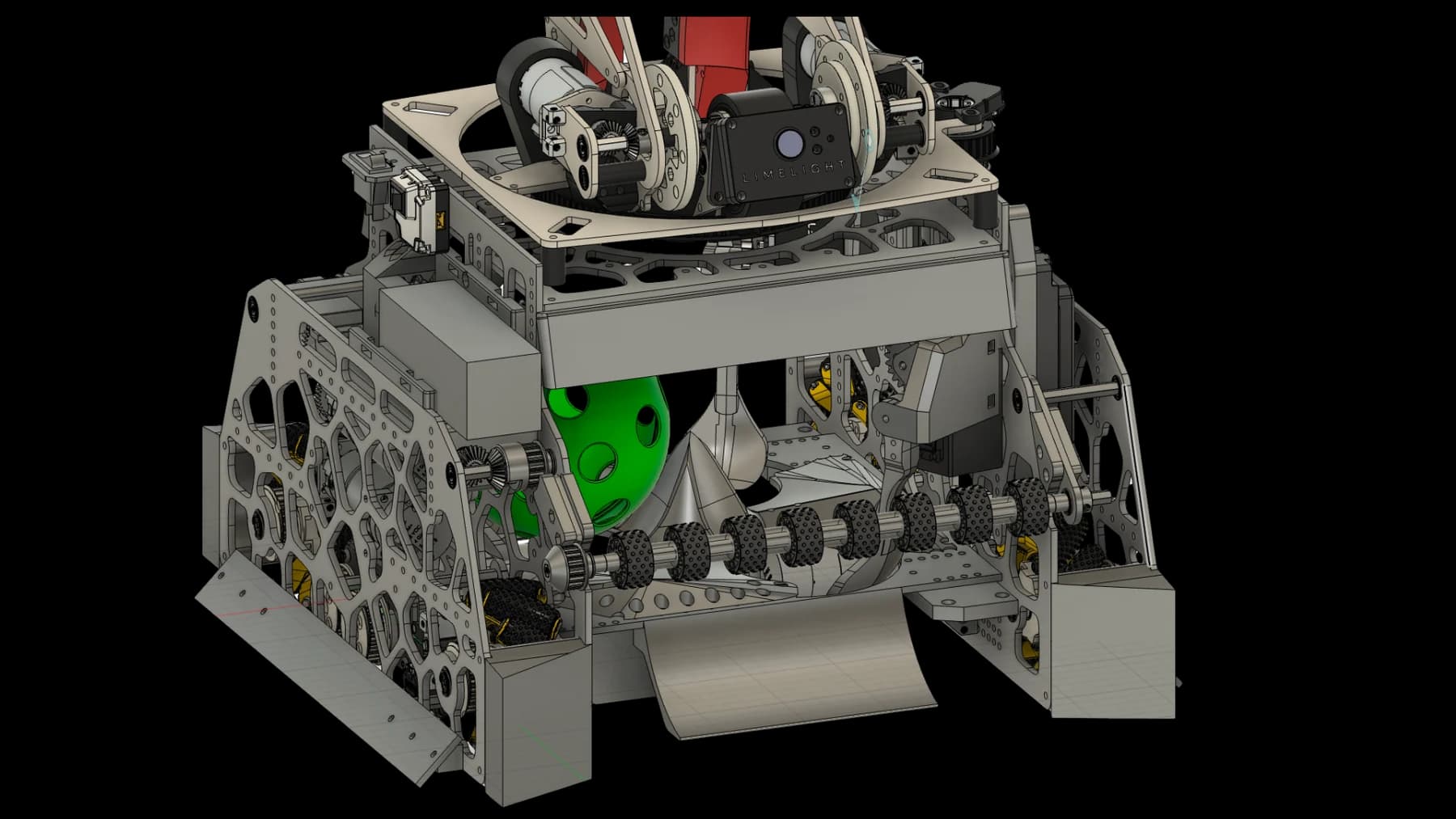
The intake and storage systems are designed as one flow: collect an artifact, guide it into a known position, identify it and release it when the scoring routine needs it.
A dual-sided intake
The robot collects from both sides to reduce unnecessary turns and repositioning. A steel transmission plate carries power from one motor to both intake shafts through a bearing-supported system.
- Eight gecko wheels on each side provide contact with the game elements.
- Ten PETG spacers on each side maintain alignment and reduce lateral play.
- Passive guides help keep artifacts on a predictable path.
Three positions, six sensors
Each of the three storage positions uses two colour sensors. Infrared distance is checked first to confirm an object is present; colour is read only after confirmation. The team’s analysis estimates that a single sensor could look through a hole in the 18-hole artifact around 5.6% of the time, compared with about 0.3% for the dual-sensor arrangement. These are geometric estimates, not independently measured match statistics.
Keep the control loop available
The second sensor is queried only if the first does not confirm detection. Polling is limited to 10 Hz per position, reducing unnecessary I²C transactions and preserving processing time for drivetrain and turret control.