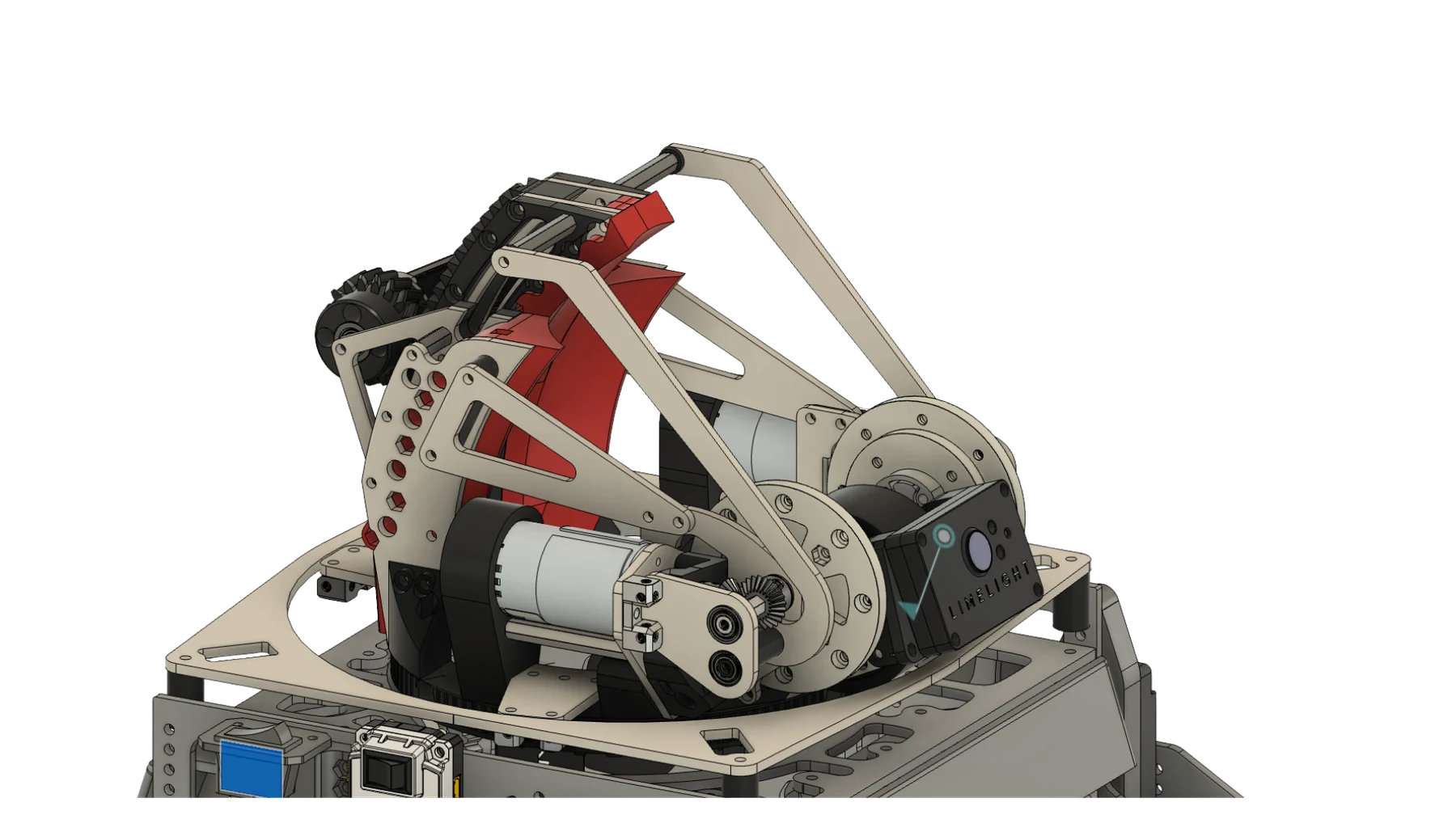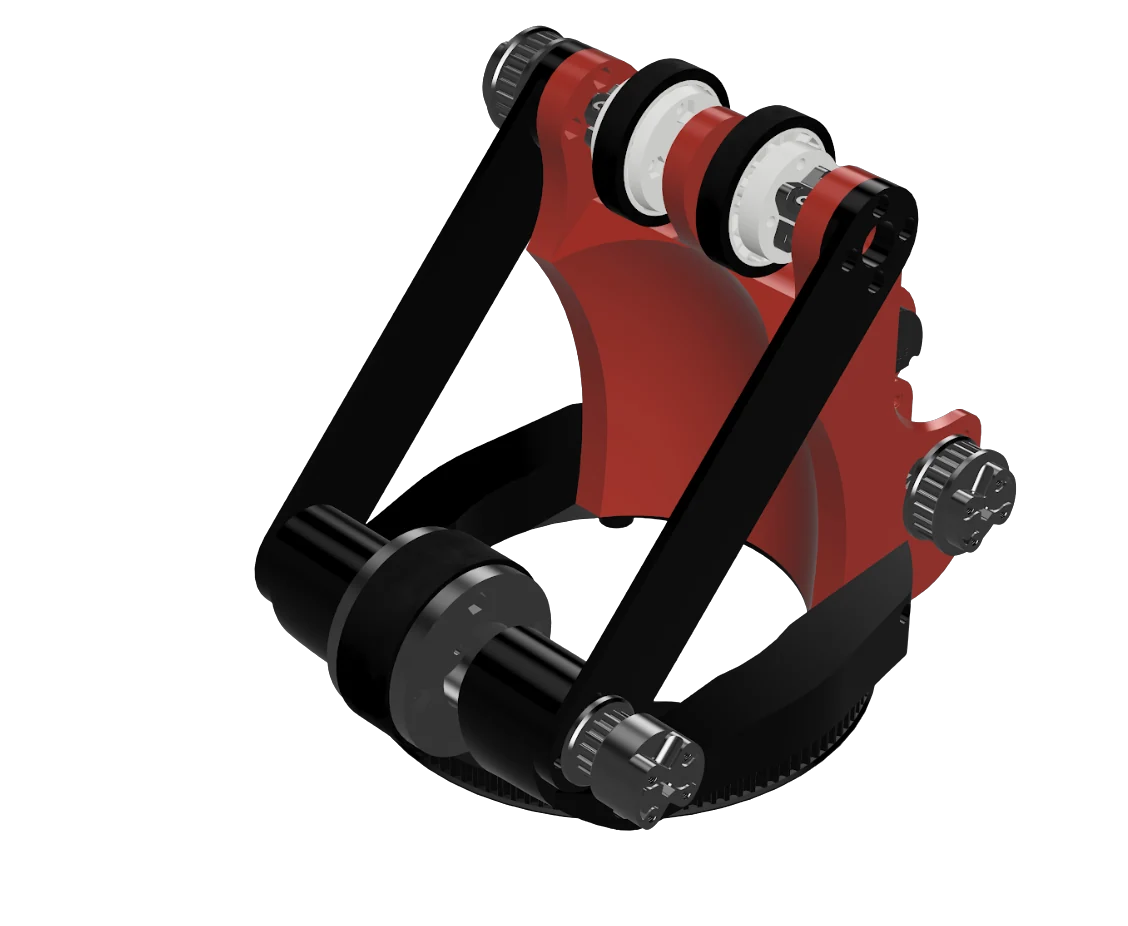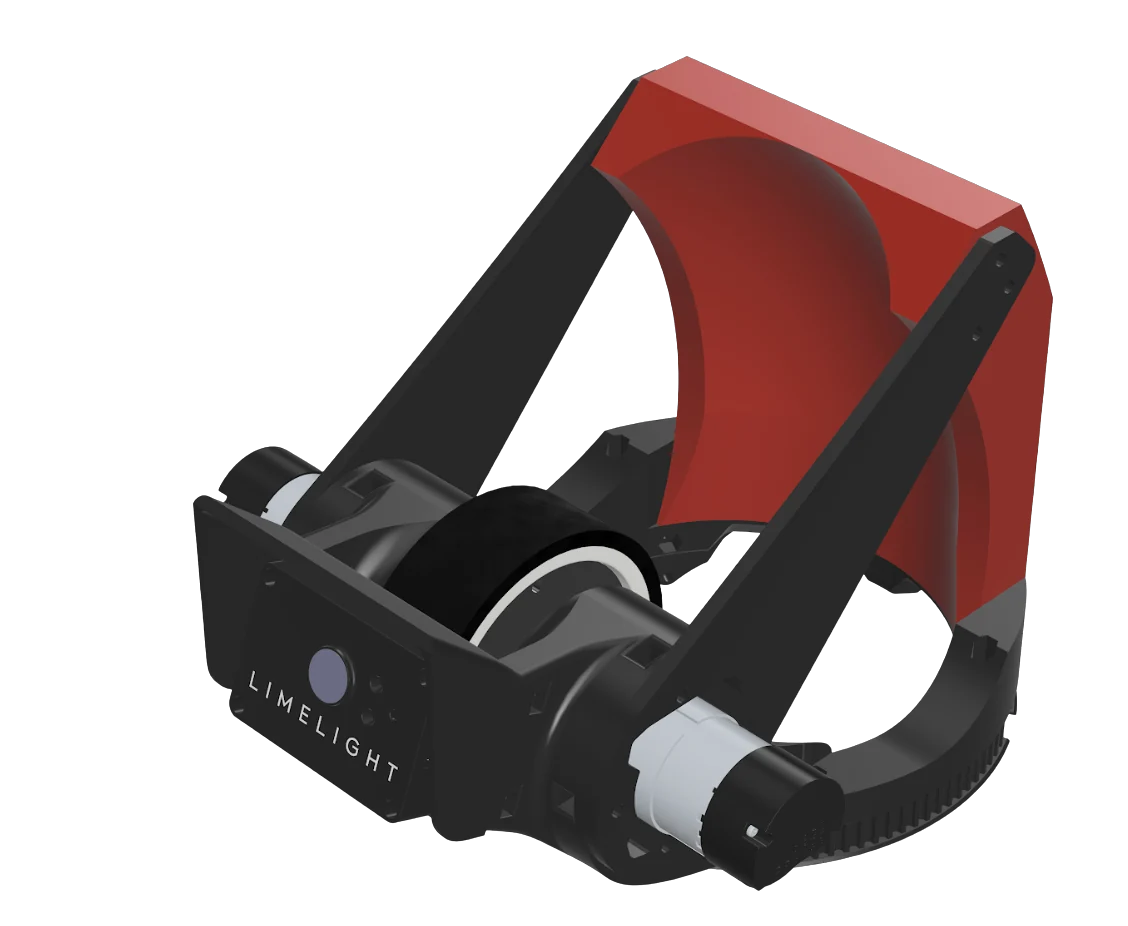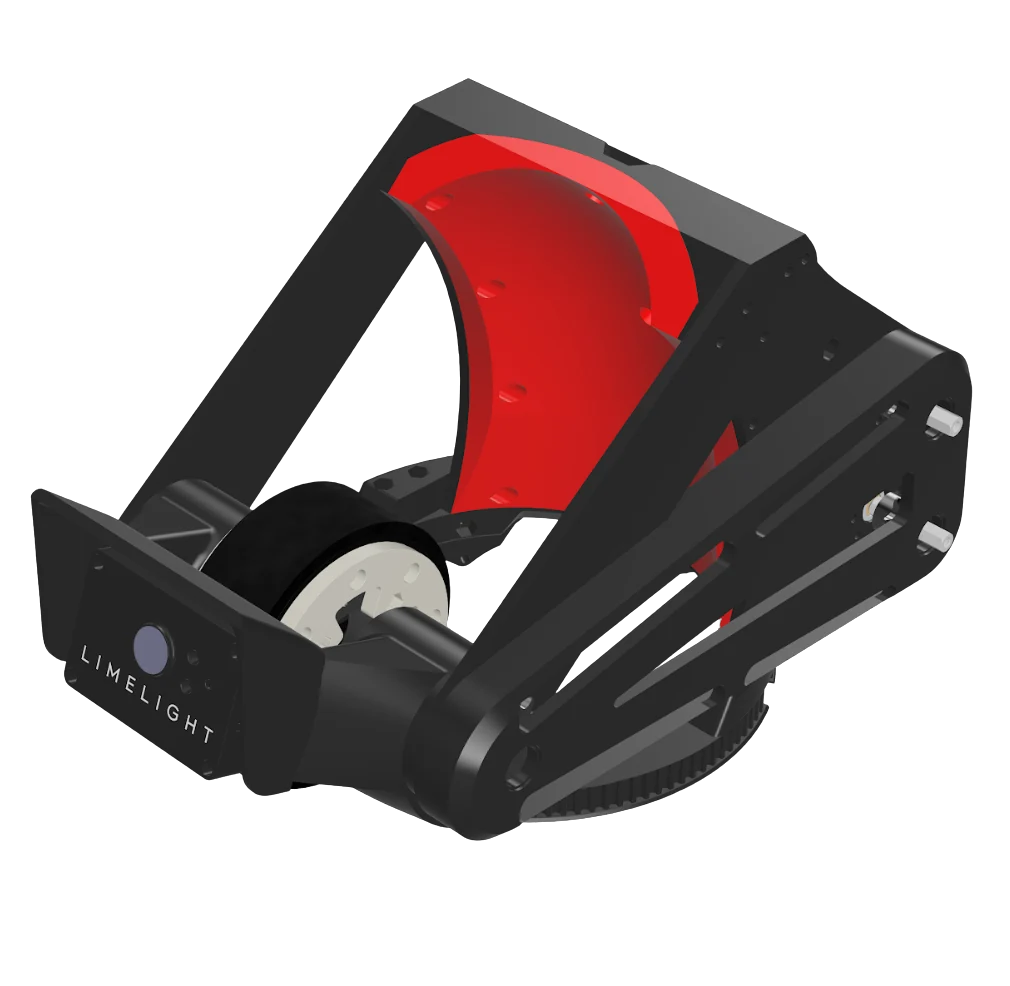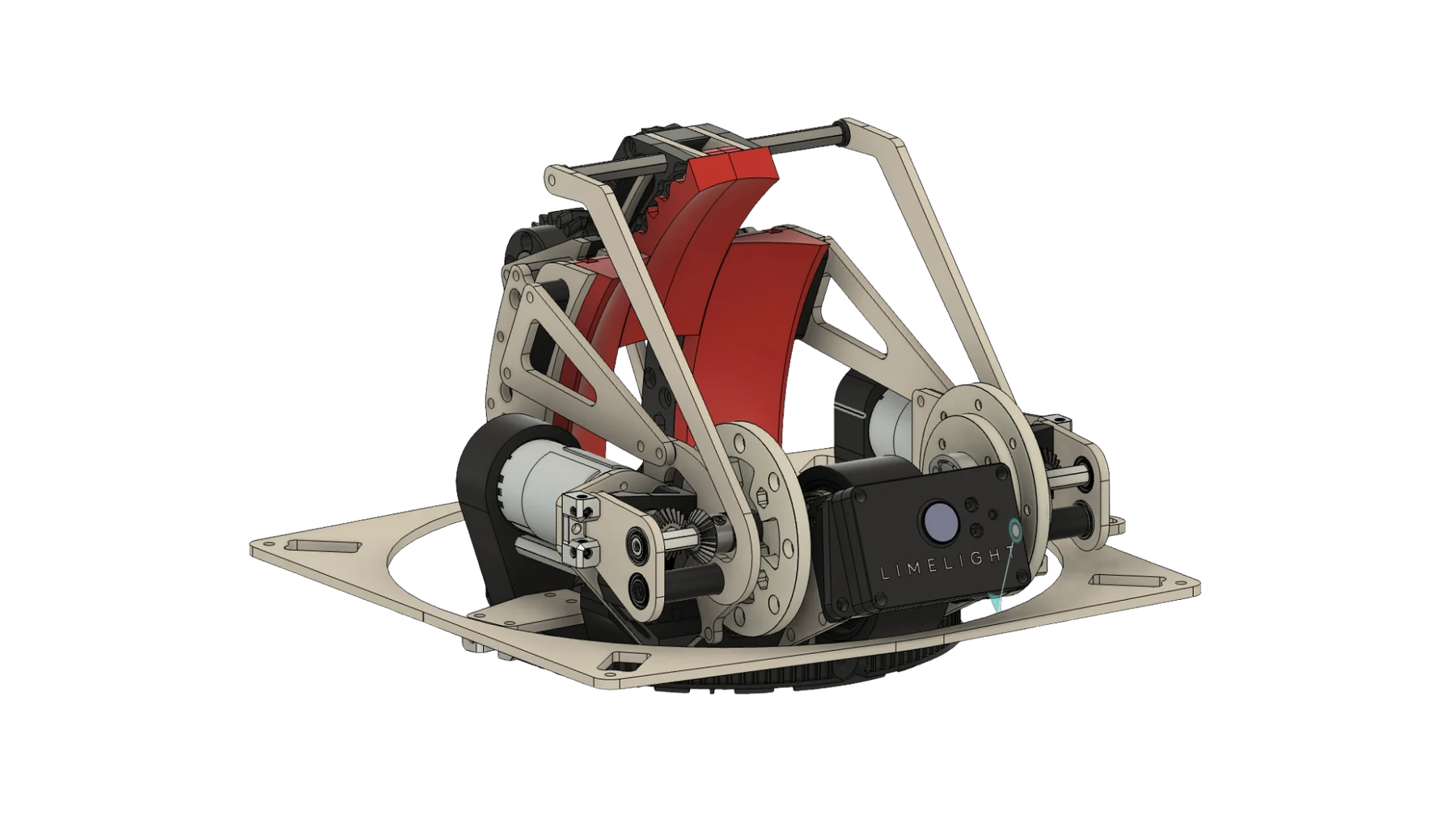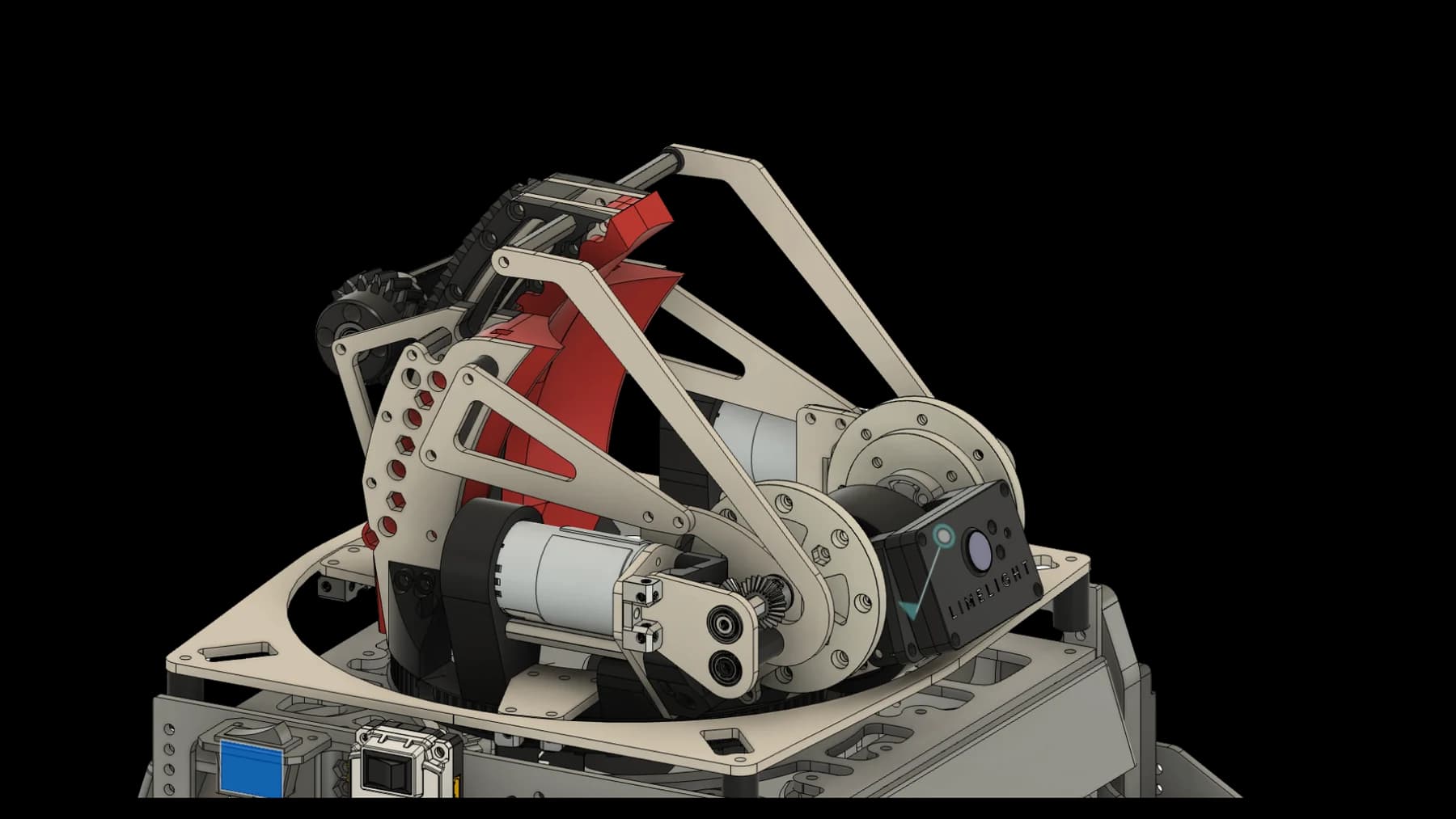
The turret and shooter combine mechanical alignment, sensor feedback and software tuning. The objective is a repeatable shot from a known position, with recovery between launches and adjustments for changing conditions.
Closed-loop turret aiming
The design uses a 435 RPM motor, a 29:113 belt ratio and a REV Through Bore Encoder rated at 8,192 counts per revolution. Together these provide about 31,920 encoder counts per turret revolution. The stated ±0.006° is a theoretical quantisation figure, not measured aiming accuracy.
- PID control includes a minimum-power threshold.
- Angular-velocity feedforward helps compensate when the robot base rotates.
- Localisation and AprilTag observations support target alignment.
Eight physical shooter prototypes
Three major generations shaped the design: a fixed 45° three-wheel arrangement, a larger 96 mm bottom-wheel version, and a dual-6,000 RPM flywheel system. Testing exposed trade-offs in energy transfer, backspin, material friction and durability. We tested several wheel configurations across these iterations.
Velocity control and an adjustable hood
Combined encoder deltas and a five-sample median filter reduced recorded RPM noise from roughly 200 RPM to about ±10 RPM in the team’s testing. PID and feedforward help compensate for load and voltage changes, while distance-based lookup tables select targets. The current hood is described as adjustable from 35° to 55°, with RPM-loss compensation intended to improve consistency.